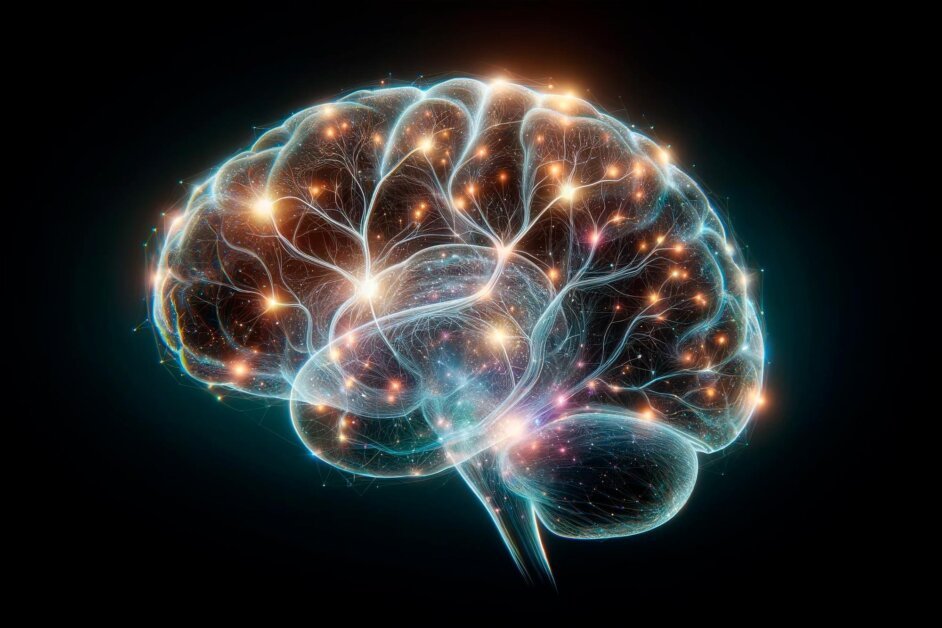
How Neuroplasticity Actually Changes the Way You Think: A Practical Guide to Rewiring Your Brain
Have you ever promised yourself that you would stop overthinking, become more confident, develop better habits or finally change a behaviour that has been holding you back?
You make a decision. You feel motivated. For a few days, everything seems different.
Then something happens. An old situation triggers an old reaction, familiar thoughts return, and you find yourself behaving exactly as you did before.
Why is changing the way we think and behave so difficult?
One important part of the answer lies in a remarkable ability of the human brain called neuroplasticity.
Your brain is not a fixed structure that remains unchanged throughout your life. It continuously adapts in response to learning, experiences, environmental demands and repeated activities.
This ability gives us an opportunity to develop new skills, learn different ways of responding to situations and gradually change established patterns of behaviour.
But what does neuroplasticity actually mean? Can you deliberately influence it? And can you use this knowledge to develop a healthier mindset?
Let’s explore the science and discover how to apply it in everyday life.
1. What Is Neuroplasticity?
Neuroplasticity, also known as brain plasticity, refers to the brain’s ability to change and reorganize its structure and functioning in response to experience, learning and environmental influences.
For a long time, people commonly believed that the adult brain was relatively fixed. Modern neuroscience has established that the brain retains the capacity to adapt throughout life.
A review published in the journal Brain Plasticity describes how experiences, learning and physical activity can influence brain organization and function.
This means that learning something new is not simply about collecting information. It also involves changes in the neural systems that support learning, memory and performance.
Consider learning to play a musical instrument.
Initially, you may struggle to coordinate your fingers, recognize notes and maintain rhythm. Each practice session requires concentration.
With repeated practice, the movements gradually become more coordinated. You recognize patterns more quickly and perform certain actions with less conscious effort.
Your brain has adapted to the demands of learning that skill.
The same broad principle of experience-dependent adaptation applies to many areas of learning and behaviour.
The important lesson: Your current abilities and habits do not necessarily represent the limits of what you can learn or develop.
2. How Does Your Brain Build and Modify Neural Connections?
Your brain contains billions of neurons, specialized cells that communicate through electrical and chemical signals.
Neurons connect with one another through structures called synapses.
These connections form complex networks that help you process information, remember experiences, recognize situations and coordinate actions.
When you repeatedly practice a particular skill or behavior, the neural networks involved in that activity can adapt.
This process is often discussed in terms of synaptic plasticity.
Synaptic plasticity refers to changes in the strength or effectiveness of communication between neurons.
Two important concepts are:
Long-term potentiation (LTP):
A lasting increase in the effectiveness of communication between particular neurons following certain patterns of activity. LTP is considered an important mechanism involved in learning and memory.
Long-term depression (LTD):
A lasting reduction in the effectiveness of communication between neurons. This also plays a role in how neural networks adapt and refine their activity.
These processes are more complicated than simply making one connection stronger and another weaker. They depend on the brain region, activity pattern and many biological factors.
Think about learning to drive.
During your first few driving lessons, you must consciously think about steering, braking, checking mirrors and changing gears.
After sufficient practice, many of these actions become more coordinated and require less deliberate attention.
Your brain has learned to handle a familiar sequence of tasks more efficiently.
This is one practical illustration of how learning and repeated experience can influence neural functioning.
3. Why Are Old Thought Patterns So Difficult to Change?
Imagine that you have spent years thinking:
- I am not good enough.
- I always make mistakes.
- Other people are better than me.
- I cannot succeed.
- I am not confident enough to speak.
When similar situations occur repeatedly, these thoughts may become familiar responses.
For example:
You receive an opportunity to speak in front of people.
Your mind immediately produces the thought, “What if I embarrass myself?”
You feel anxious, avoid speaking and experience temporary relief.
The next time a similar opportunity appears, you may experience the same response.
Over time, avoidance can become a familiar behavioural pattern.
This does not mean that one negative thought permanently creates a physical neural pathway or that the brain is trapped by a single belief.
Rather, repeated experiences, learned associations, emotions and behavioural responses can reinforce patterns of thinking and acting.
The brain often relies on previously learned responses because familiar situations can make those responses easier to activate.
However, familiar does not always mean useful.
If you want to change an established pattern, you need opportunities to practise responding differently.
For example:
Instead of thinking, “I cannot speak confidently,” try asking:
“What is one small action I can take to improve my speaking ability?”
Then practise that action.
You might begin by speaking for two minutes in front of a mirror, recording your voice or expressing one idea during a meeting.
The objective is not to force yourself to feel confident immediately.
It is to create new experiences through which confidence and skill can gradually develop.
4. Can Repetition Actually Change the Way You Think?
Repetition is an important part of learning, but repetition alone does not guarantee meaningful change.
What matters is what you repeatedly practice, the context in which you practice it and the feedback you receive.
Consider two people learning a new language.
The first person reads vocabulary lists repeatedly but rarely uses the words.
The second person reads, listens, speaks, makes mistakes, receives feedback and uses the language in real conversations.
Both are repeating an activity, but the second person is engaging in a broader learning process.
This illustrates why effective practice often includes:
1. Attention: Focus on the skill or behaviour you want to develop.
2. Active practice: Perform the activity instead of only thinking about it.
3. Feedback: Identify what is working and what needs improvement.
4. Correction: Adjust your approach based on what you learn.
5. Consistency: Return to the activity regularly.
The brain adapts through experience, and meaningful learning generally requires more than simply repeating words or positive statements.
If you want to develop confidence, practise confident behaviours.
If you want to become a better communicator, communicate.
If you want to improve your ability to manage stress, practise useful emotional regulation strategies.
Your actions provide experiences that can support learning.
5. What Happens When You Visualize Your Goals?
Visualization is widely used in sports, performance training, meditation and personal development.
It involves mentally imagining an experience, action or situation.
For example, imagine preparing to deliver an important presentation.
You mentally rehearse:
- Walking confidently onto the stage.
- Standing in a comfortable posture.
- Speaking clearly.
- Maintaining eye contact.
- Responding calmly to questions.
This is an example of mental rehearsal.
Research on mental simulation suggests that imagining future actions and experiences can influence behaviour, although the effects depend on the type of mental simulation and the situation.
A systematic review and meta-analysis published in Psychonomic Bulletin & Review examined 123 effect sizes involving 5,685 participants and found an overall positive effect of mental simulation on behaviour.
However, visualization should not be confused with magically creating external circumstances.
Imagining success does not guarantee success.
A more useful approach is to visualize the process, anticipate challenges and mentally rehearse the actions required to achieve a goal.
For example:
Instead of imagining only receiving a promotion, visualize yourself developing a skill, completing important work, communicating effectively and handling difficult situations.
Then translate that mental rehearsal into real-world action.
Visualization becomes more useful when it supports preparation and behaviour.
6. The Role of Exercise, Learning and Sleep in Brain Adaptation
Neuroplasticity is influenced by many factors. It is not controlled by positive thinking alone.
Three important areas deserve attention.
A. Physical exercise
Physical activity supports brain health and is associated with biological processes involved in brain plasticity.
Research reviews have examined how aerobic exercise may influence neurotrophic factors, blood flow and neural adaptation.
Exercise also supports general physical and psychological well-being.
You do not need to begin with an intense fitness program.
Depending on your health and ability, activities such as walking, cycling, swimming or other regular movement can be useful starting points.
B. Continuous learning
Learning new skills challenges the brain to process information, develop strategies and adapt to new demands.
Examples include:
- Learning a new language.
- Playing a musical instrument.
- Studying a technical subject.
- Practising problem-solving.
- Developing a new professional skill.
The key is to engage in meaningful learning rather than simply consuming information passively.
C. Quality sleep
Sleep plays an important role in memory consolidation.
During sleep, the brain processes and stabilizes aspects of newly acquired information and experiences.
Insufficient sleep can interfere with attention, learning and memory.
If you are trying to develop a new skill or change a habit, sleep should not be treated as an optional part of the process.
A healthy routine that includes sufficient sleep, regular physical activity and consistent learning can support the conditions needed for brain adaptation.
7. The Neuropathway Blueprint: A Practical Framework for Changing Thought Patterns
Understanding neuroplasticity is useful, but how can you apply it to your everyday life?
At BlogStoriesWorld, we propose the following practical framework: The Neuropathway Blueprint.
It is an educational self-development framework inspired by principles of learning, behavioural change and neuroplasticity. It is not a clinically validated treatment or a proven method for directly measuring changes in neural pathways.
The framework has five stages.
Stage 1: Recognize the existing pattern
Start by identifying the thought or behaviour you want to change.
For example:
“I avoid opportunities because I am afraid of making mistakes.”
Write down when this thought appears and what situations trigger it.
You cannot deliberately work on a pattern if you have not identified it.
Stage 2: Understand the trigger
Observe what happens immediately before the behavior.
Ask yourself:
- What situation triggered this response?
- What was I thinking?
- What emotion did I experience?
- What did I do next?
- What short-term benefit did I receive from that behavior?
For example, avoiding a presentation may temporarily reduce anxiety.
Recognizing this pattern helps you understand why the behavior continues.
Stage 3: Reframe the response
Develop a more balanced and useful alternative thought.
Old thought:
“I will definitely fail.”
New thought:
“I may feel uncomfortable, but I can prepare and improve through practice.”
The purpose is not to replace every negative thought with an unrealistically positive statement.
It is to develop a response that is realistic, constructive and helpful.
Stage 4: Rehearse a new behaviour
Now take a small action that supports the new response.
If you want to become more confident, begin with a manageable challenge.
For example:
- Speak for two minutes in front of a mirror.
- Record a short video.
- Ask one question during a meeting.
- Share one idea with another person.
Repeat the activity and gradually increase the difficulty.
Stage 5: Reinforce through consistency
Observe your progress.
What became easier?
Which situations still trigger the old response?
What adjustments can you make?
Continue practising the new behaviour and use setbacks as information rather than proof of failure.
Remember, changing a long-established pattern may take time. Progress is rarely perfectly linear.
8. A Practical 7-Day Brain Training Exercise
Here is a simple exercise to help you apply the Neuropathway Blueprint.
Choose just one behaviour or thought pattern to work on.
Do not attempt to transform your entire personality in seven days.
Day 1: Identify your pattern
Write down one recurring thought or behavior you want to change.
Day 2: Identify your triggers
Notice the situations in which the pattern appears.
Day 3: Examine your automatic response
Write down what you usually think, feel and do when the trigger occurs.
Day 4: Develop an alternative response
Create one realistic and constructive thought that supports a healthier action.
Day 5: Practice the new behavior
Take one small action that challenges the old response.
Day 6: Repeat and reflect
Practice again. Record what felt easier and what remained difficult.
Day 7: Review your progress
Answer these questions:
- What did I learn about my existing pattern?
- Which new response did I practice?
- What challenges did I experience?
- What action will I continue next week?
Your 7-Day Progress Tracker
Use this simple table to monitor your experience.
| Day | Practice | Completed? |
|---|---|---|
| 1 | Identify the pattern | □ |
| 2 | Recognize the trigger | □ |
| 3 | Observe the automatic response | □ |
| 4 | Develop an alternative thought | □ |
| 5 | Practise a new behaviour | □ |
| 6 | Repeat the behaviour | □ |
| 7 | Review your progress | □ |
This is a self-observation exercise, not a scientific test of neuroplasticity. Seven days is not enough to establish that a lasting neural change has occurred.
The purpose is to begin building awareness and practicing a different response.
9. Common Myths About Rewiring Your Brain
There is considerable misinformation about neuroplasticity, particularly in the personal development and manifestation space.
Let’s clarify some common misconceptions.
Myth 1: You can completely reprogram your brain in 21 days.
Reality: There is no universal 21-day rule for changing the brain or forming every habit. Habit formation varies depending on the behavior, person, frequency and context.
A 2024 systematic review of health-related habit formation found substantial individual variation, with reported estimates differing considerably across studies.
Myth 2: Repeating positive affirmations automatically changes your brain.
Reality: Affirmations may be useful for some people as a self-reflection or motivational practice, but repeating a statement does not guarantee a change in neural connections or behavior.
Pair constructive self-talk with realistic goals and consistent actions.
Myth 3: Visualization alone can create success.
Reality: Mental rehearsal can support preparation and performance in some situations. It cannot replace learning, effort, planning or real-world action.
Myth 4: Neuroplasticity means you can control every thought.
Reality: Thoughts arise from complex interactions involving memory, emotion, attention, biology and environmental influences. You cannot control every thought, but you can practice how you respond to many of them.
Myth 5: The brain stops changing after adulthood.
Reality: The adult brain retains the ability to adapt. However, the nature and rate of plasticity vary across different stages of life and circumstances.
Understanding these limitations helps us use neuroscience responsibly.
Conclusion: Your Brain Can Adapt, and Your Actions Matter
One of the most encouraging ideas in modern neuroscience is that the brain is capable of adapting throughout life.
You are not necessarily required to remain the person shaped by your past experiences, old habits or familiar ways of thinking.
You can learn new skills, develop different responses, improve your abilities and gradually build healthier patterns of behavior.
But meaningful change does not happen simply because you think about it.
It requires experience, practice, feedback, repetition and patience.
Start with one pattern.
Recognize it. Understand it. Practice a different response. Repeat the process.
Over time, these small actions can contribute to meaningful behavioral development.
Your past may have influenced the way you think today, but your future learning and actions can influence who you become tomorrow.
The journey of transformation begins not with the promise of an instant mental reset, but with the decision to practice something different.
Frequently Asked Questions (FAQs)
1. Can you rewire your brain at any age?
Yes. The brain retains neuroplastic capacity throughout life. However, the rate and nature of adaptation vary with age, health, experience and the type of learning.
2. How long does it take to rewire your brain?
There is no universal timeline. Learning a simple skill, developing a habit and changing a deeply established behavioral pattern are different processes. The time required depends on the individual and the behavior.
3. Can positive thinking change neural pathways?
Thoughts and experiences are related to brain activity, but simply repeating positive thoughts does not guarantee structural brain changes. Constructive thinking combined with learning and meaningful action is a more practical approach.
4. Does visualization help with neuroplasticity?
Mental imagery can support certain types of learning, preparation and performance. Its effectiveness depends on the task and the way visualization is used. It works best as a complement to real practice rather than a replacement.
5. Can negative thinking become a habit?
Repeated patterns of thinking and responding can become familiar and automatic. Recognizing triggers, practicing alternative responses and changing behavioral patterns may help develop healthier ways of responding.
6. What are the best daily activities to support brain health?
Regular physical activity, sufficient sleep, meaningful learning, social engagement and cognitively stimulating activities can support brain health and adaptive functioning.
7. Is neuroplasticity the same as manifestation?
No. Neuroplasticity is a scientifically studied biological process involving changes in the brain. Manifestation is a broader spiritual and personal development concept. Certain manifestation practices, such as visualization and goal-setting, may overlap with evidence-based psychological techniques, but this does not establish that thoughts directly control external events.
References and Further Reading
- Milbocker, K. A., Smith, I. F., & Klintsova, A. Y. (2024). Maintaining a Dynamic Brain: A Review of Empirical Findings Describing the Roles of Exercise, Learning, and Environmental Enrichment in Neuroplasticity from 2017–2023. Brain Plasticity. https://pmc.ncbi.nlm.nih.gov/articles/PMC11234674/
- Singh, B., Murphy, A., Maher, C., & Smith, A. E. (2024). Time to Form a Habit: A Systematic Review and Meta-Analysis of Health Behaviour Habit Formation and Its Determinants. Healthcare. https://pmc.ncbi.nlm.nih.gov/articles/PMC11641623/
- Synthesizing the Effects of Mental Simulation on Behavior Change: Systematic Review and Multilevel Meta-Analysis. Psychonomic Bulletin & Review. https://pubmed.ncbi.nlm.nih.gov/33948918/
- Learning Motor Actions via Imagery-Perceptual or Motor Learning? Psychological Research. https://pubmed.ncbi.nlm.nih.gov/36680584/
Disclaimer: This article is intended for educational and general informational purposes. It does not provide medical or psychological diagnosis or treatment. If you are experiencing persistent distress or significant difficulties with thinking, mood or behavior, consider consulting a qualified healthcare professional.